

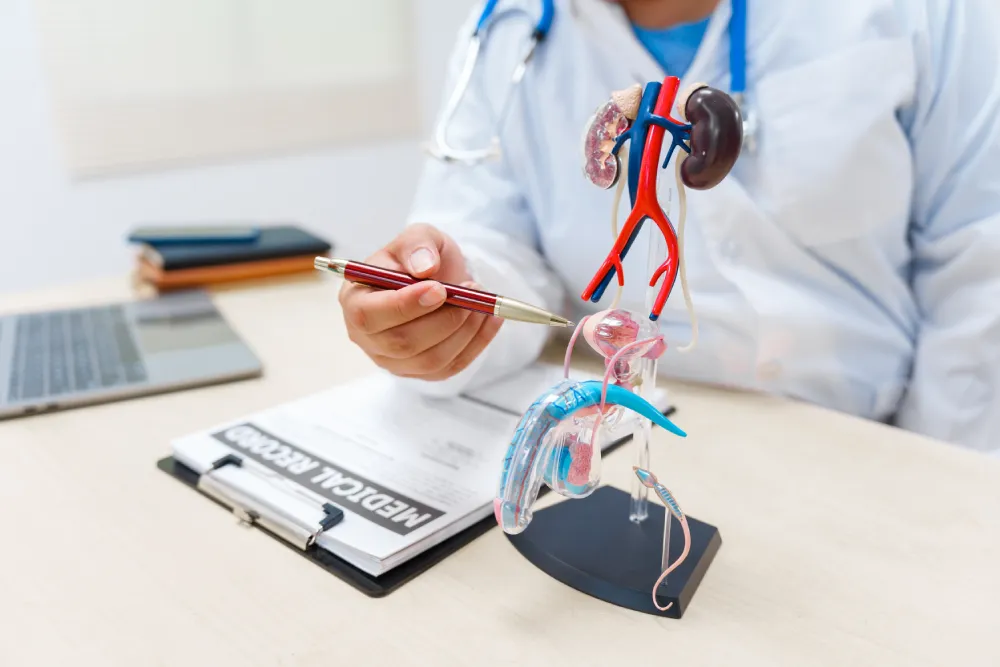
Prostate conditions are common and can present in different ways, from mild urinary symptoms to more complex concerns that require further evaluation. If your symptoms, examination findings or initial test results suggest a prostate condition, you may be referred to a prostate specialist for a more detailed assessment.
A prostate specialist, also known as a urologist or prostate doctor, performs a range of diagnostic and treatment procedures to identify the underlying cause of prostate problems and recommend appropriate management. The procedures recommended depend on your symptoms, test results and the condition being investigated or treated.
When Should You See a Prostate Specialist?
Many prostate conditions share similar symptoms, making it difficult to determine the underlying cause without a specialist assessment. While mild symptoms may sometimes be managed by a general practitioner, persistent or worsening symptoms often require further evaluation by a prostate specialist.
You may be referred to a prostate specialist if you experience:
- Difficulty starting or maintaining urination
- Frequent urination, particularly at night
- A weak or interrupted urine stream
- Pain or burning during urination
- Blood in the urine or semen
- Persistent pelvic discomfort
- An elevated or rising PSA blood test
- An abnormal digital rectal examination (DRE)
A prostate doctor will review your medical history, discuss your symptoms and perform a physical examination before deciding whether further investigations or procedures are required.
What Diagnostic Procedures Does a Prostate Specialist Perform?
A prostate specialist performs different diagnostic procedures depending on your symptoms, examination findings and suspected condition. Rather than relying on a single test, several investigations are often combined to build a clearer understanding of your prostate health and guide treatment decisions.
Digital Rectal Examination (DRE)
A digital rectal examination allows the prostate specialist to assess the size, shape and consistency of the prostate gland by gently examining it through the rectum. Although brief, this examination may detect enlargement, hard areas or irregularities that require further investigation.
Prostate Biopsy
A prostate biopsy is one of the most important procedures used to diagnose or exclude prostate cancer. During the procedure, small samples of prostate tissue are collected using a specialised needle before being examined under a microscope.
A prostate biopsy may be recommended in the following situations:
- PSA levels remain elevated or continue to rise
- The DRE identifies an abnormal area
- MRI findings suggest suspicious changes within the prostate
Modern biopsy techniques are often performed using ultrasound or MRI fusion guidance, allowing tissue samples to be taken more accurately from areas of concern while reducing unnecessary sampling.
Cystoscopy
If urinary symptoms cannot be fully explained by prostate enlargement, also known as benign prostatic hyperplasia (BPH), a prostate specialist may recommend cystoscopy. This procedure uses a thin camera inserted through the urethra to examine the urethra, prostate and bladder.
Cystoscopy helps identify problems such as urethral narrowing, bladder abnormalities, stones or obstruction caused by an enlarged prostate.
Imaging and Additional Investigations
Additional investigations may include multiparametric MRI, ultrasound or specialised urine flow studies, depending on your symptoms and suspected condition. Together, these tests provide detailed information about prostate anatomy, urinary function and the extent of any abnormal findings before treatment is recommended.
What Treatment Procedures Can a Prostate Specialist Perform?
Once a diagnosis has been established, your prostate specialist will recommend the most appropriate treatment procedure based on the underlying condition, symptom severity, prostate size, general health and treatment goals.
Minimally Invasive Prostate Procedures
Many prostate conditions can now be treated using minimally invasive techniques designed to relieve urinary symptoms while reducing disruption to surrounding tissue. Depending on your diagnosis, prostate size and anatomy, your prostate specialist may recommend options such as the UroLift® System, Rezūm water vapour therapy or the Prolieve® Thermodilation System for selected patients with benign prostatic hyperplasia (BPH).
Compared to traditional surgery, these procedures may offer benefits such as:
- Smaller or no external incisions
- Reduced bleeding
- Less postoperative discomfort
- Shorter hospital stays
- Faster recovery and return to daily activities
Not every patient is suitable for minimally invasive treatment. A prostate specialist will consider factors such as prostate size, anatomy, overall health and the specific diagnosis before recommending the most appropriate option.
Surgical Procedures
Surgery may be recommended when symptoms are severe, conservative treatments have not been effective or a condition requires definitive treatment.
Depending on the underlying condition, surgical procedures may include:
Transurethral Resection of the Prostate (TURP)
Procedures such as transurethral resection of the prostate (TURP) remove excess prostate tissue through the urethra without external incisions. These procedures are commonly performed to improve urinary flow in men with BPH.
Robotic-assisted Radical Prostatectomy
Robotic-assisted radical prostatectomy is commonly performed for selected patients with prostate cancer. The robotic platform provides enhanced visualisation and precise instrument control, which may help reduce blood loss and support recovery in appropriately selected patients.
Open or Laparoscopic Surgery
Although less commonly required today, open or laparoscopic procedures may still be recommended in selected cases involving very large prostates or more complex conditions where minimally invasive approaches are not suitable.
The most appropriate procedure depends on your symptoms, diagnostic findings and overall health. Your prostate specialist will explain the available options, expected outcomes and why a particular procedure is recommended.

Take the Next Step Towards Prostate Care with Dr Lincoln Tan
The procedures performed by a prostate specialist depend on the condition being investigated and the information needed to reach an accurate diagnosis or provide effective treatment. From diagnostic procedures such as prostate biopsy and cystoscopy to minimally invasive therapies and surgery, each recommendation is based on your symptoms, examination findings and overall health.
At Tan Urology’s Prostate Clinic, we provide comprehensive assessment and treatment for a wide range of prostate conditions using both diagnostic procedures and therapeutic procedures. Our urologist, Dr Lincoln Tan carefully evaluates each patient’s symptoms, investigation results and treatment goals before recommending the most appropriate management approach.
If you have persistent urinary symptoms, abnormal PSA results or concerns about your prostate health, arrange an appointment to discuss the appropriate treatment options for your condition.
FAQs About Prostate Surgery Procedures

Dr Lincoln Tan
Dr Lincoln Tan is a consultant urologist with clinical experience in diagnosing and managing prostatitis and
prostate cancer in Singapore. He is trained in both open and minimally invasive surgical techniques, including
keyhole approaches, and provides care tailored to each patient’s needs.
His work spans the full range of prostate conditions, from initial testing and diagnosis using modern biopsy
methods to planning treatment options such as robotic surgery and other established therapies. Dr Tan places
strong emphasis on clear communication, patient education and evidence-based care.
您的前列腺健康为首
地点
6号纳皮尔路 #05-03,
鹰阁医疗中心,
新加坡邮区 258499
联系我们
| 电话 | : +65 6732 6503 |
| 电邮 | : info@tanurology.com.sg |
